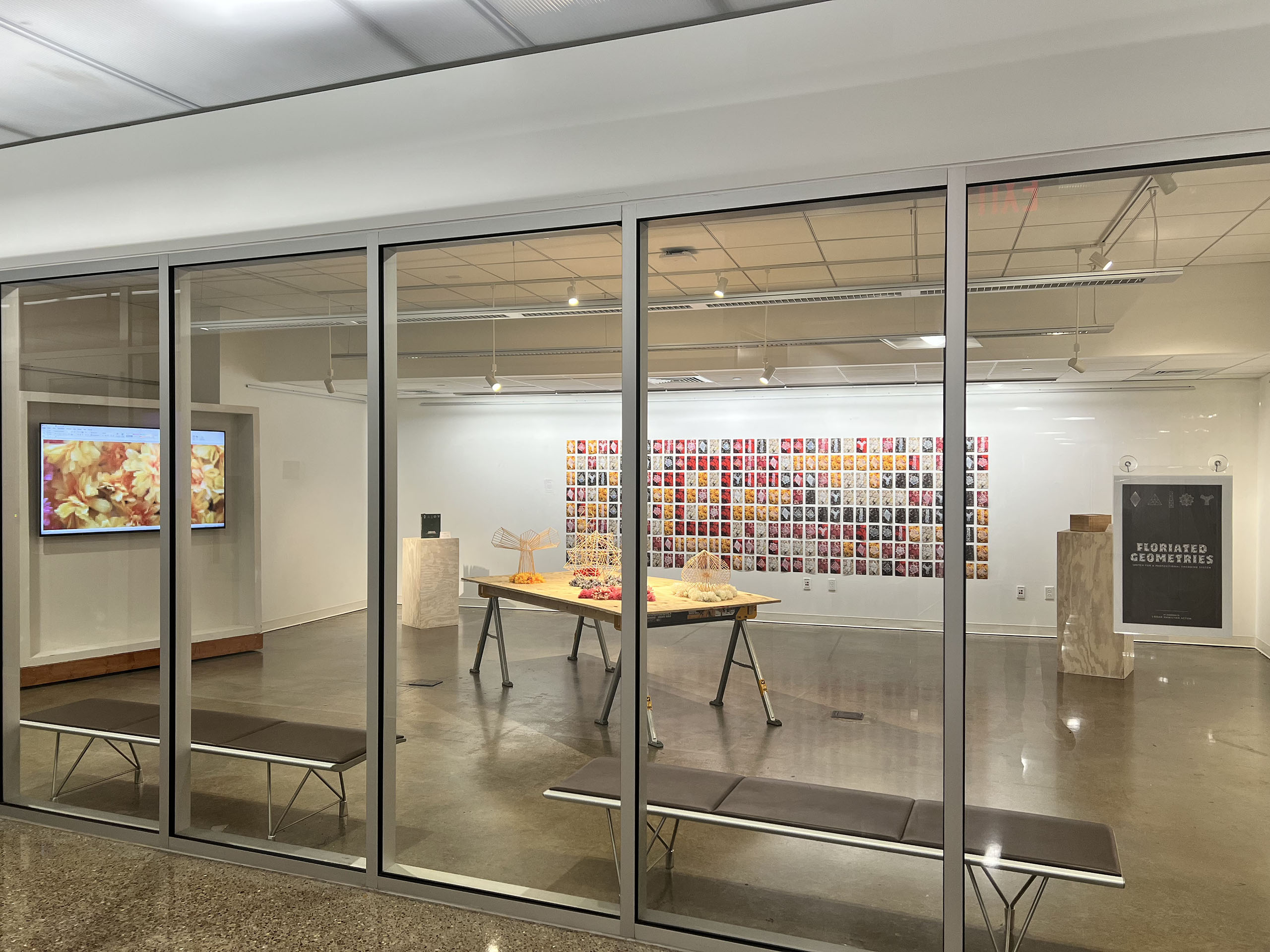
As the creative component of Logan Acton’s doctoral research, this interactive exhibition translated historical inquiry into a propositional encoding system—testing how information might be made physical, self-indexing, and meaningfully visualized.
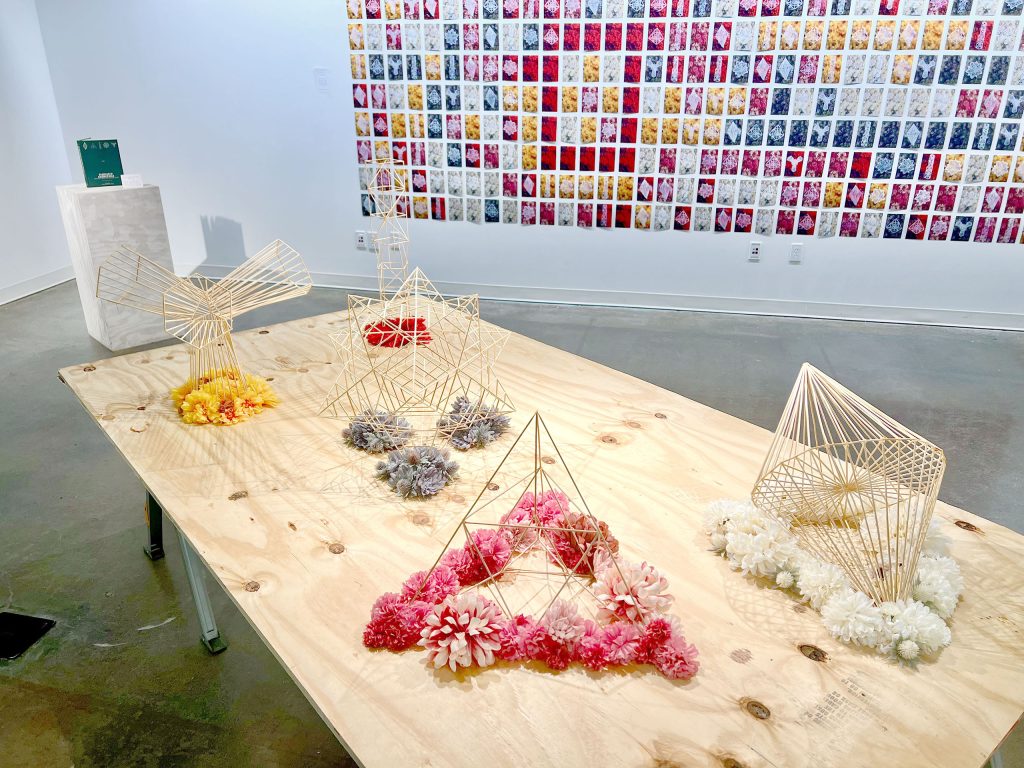
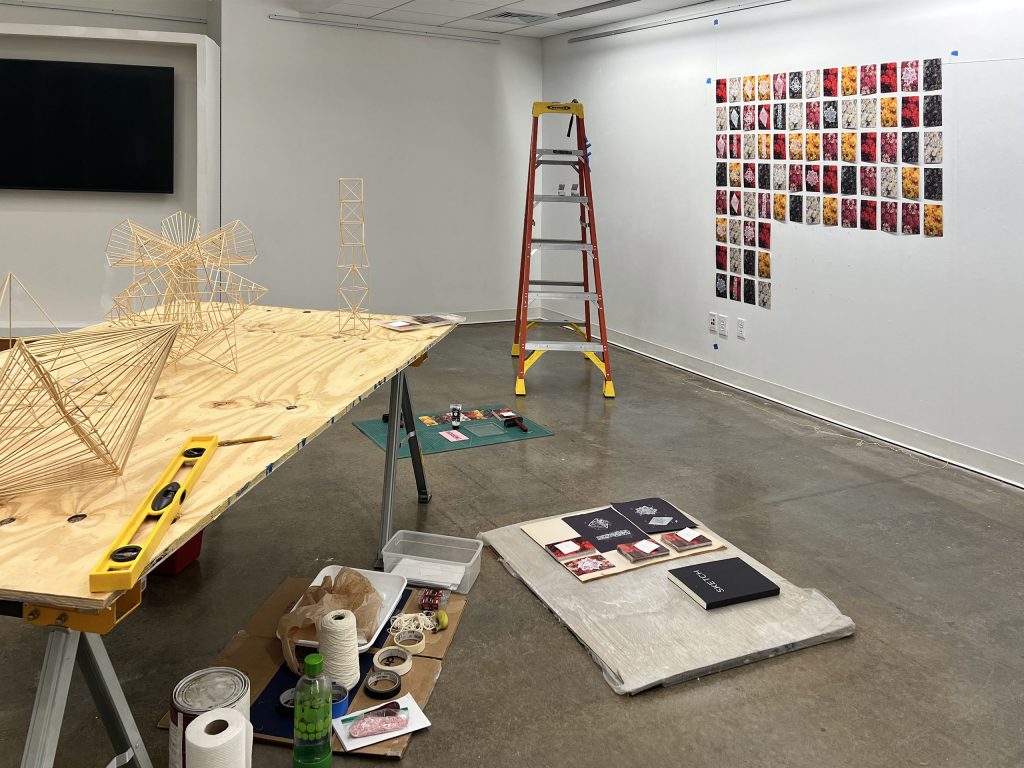
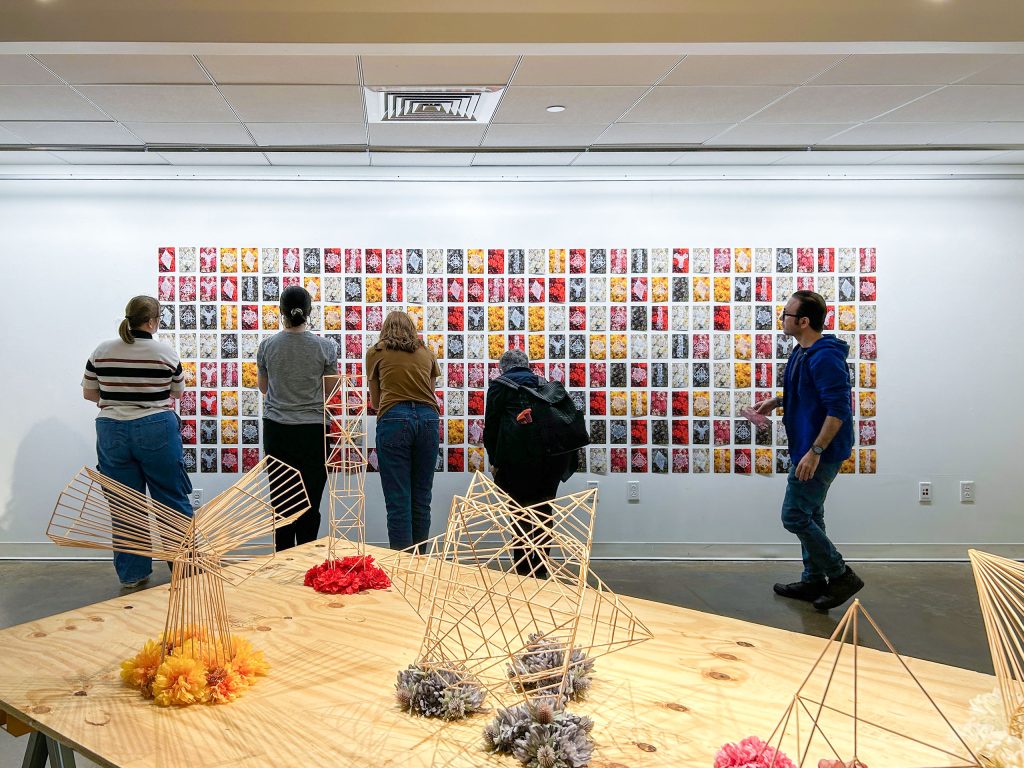
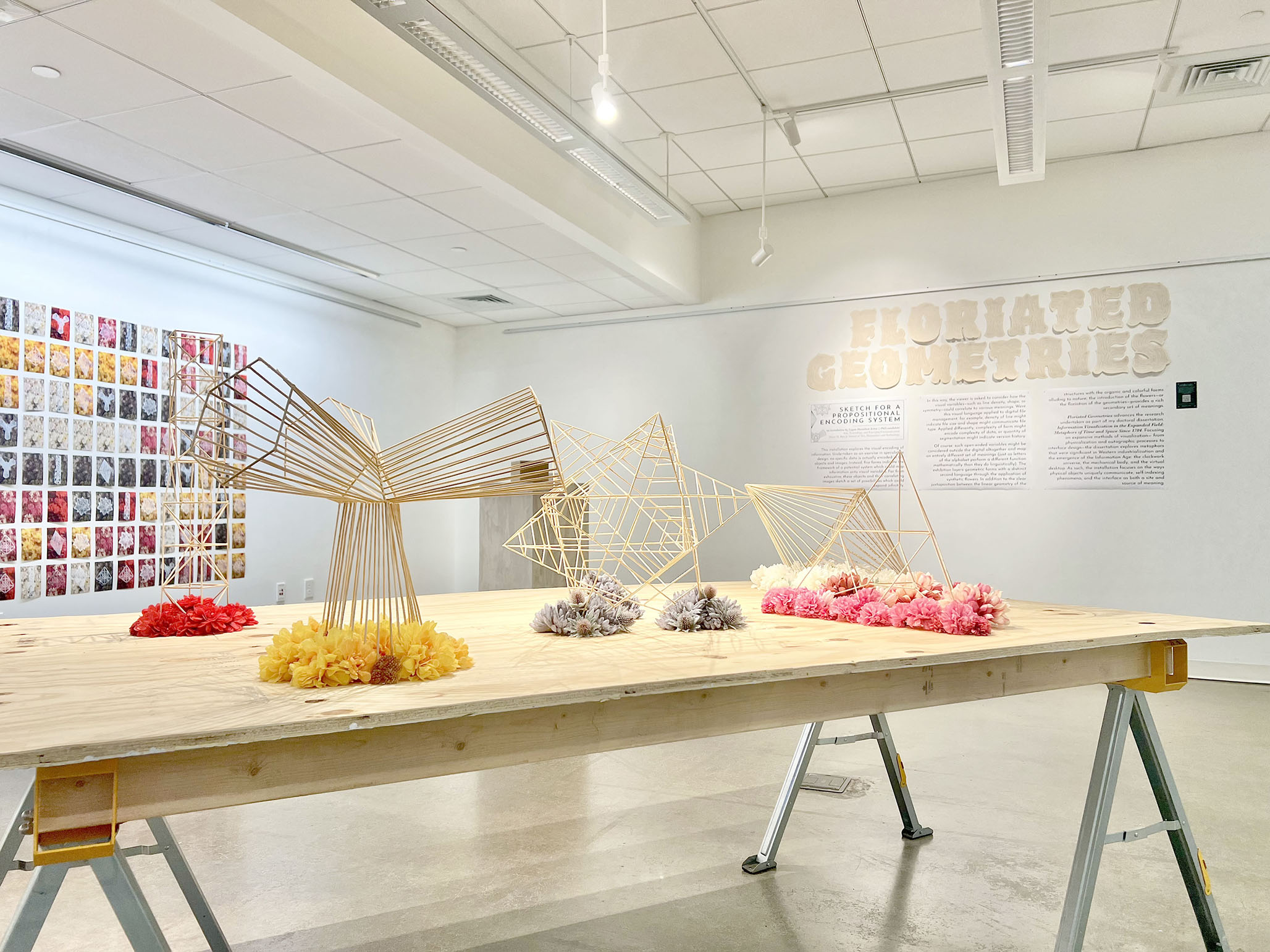
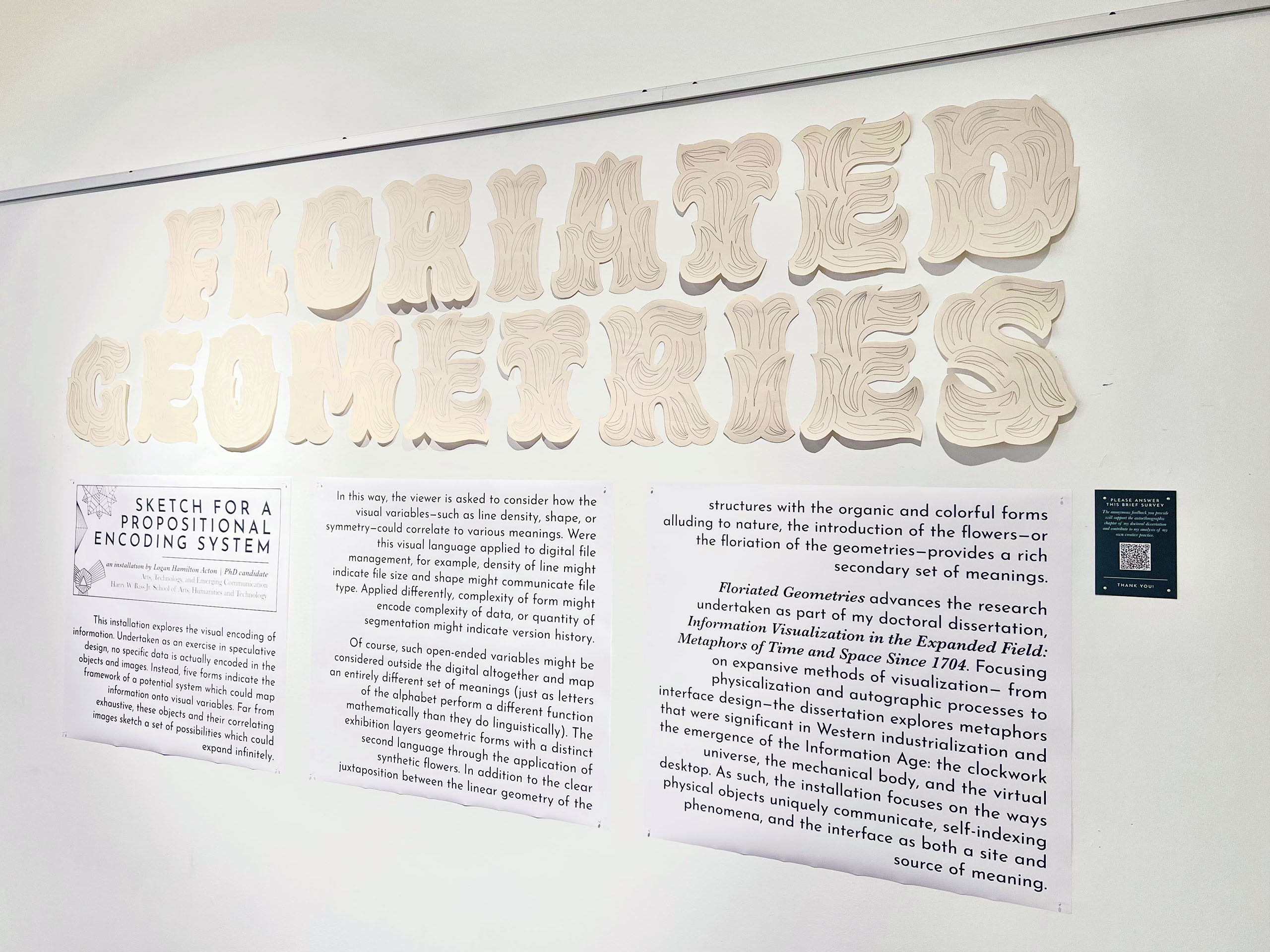
INSTALLATION VIEW: Five geometric forms moved between sculpture, drawing, print, book, video, and an interactive wall.
Research context
Doctoral creative research • information visualization + metaphor
Role
Research, concept, visual system, exhibition design + production
Presentation
UT Dallas AHT Gallery • Nov 3–16, 2025
Documentation photographs courtesy Argot Nots and Christine Veras.
THE RESEARCH QUESTION + THE DESIGN OPPORTUNITY
The inquiry began with interfaces. The opportunity was larger.
The dissertation examined how physicalization, autographic processes, interfaces, and metaphor shape what information can mean. The initial practical proposal was a digital desktop alternative; the work expanded when a single screen proved too narrow for the relationships under study.
THE INITIAL DIRECTION
Visualize an alternative digital interface organized through metadata and relational queries.
INITIAL DIRECTION → REFRAMED OPPORTUNITY
The Reframed Opportunity
Build an exhibition-scale thought experiment where objects, images, interfaces, and participant choices could make encoding tangible.
The Inputs
Historical inquiry met material experimentation.
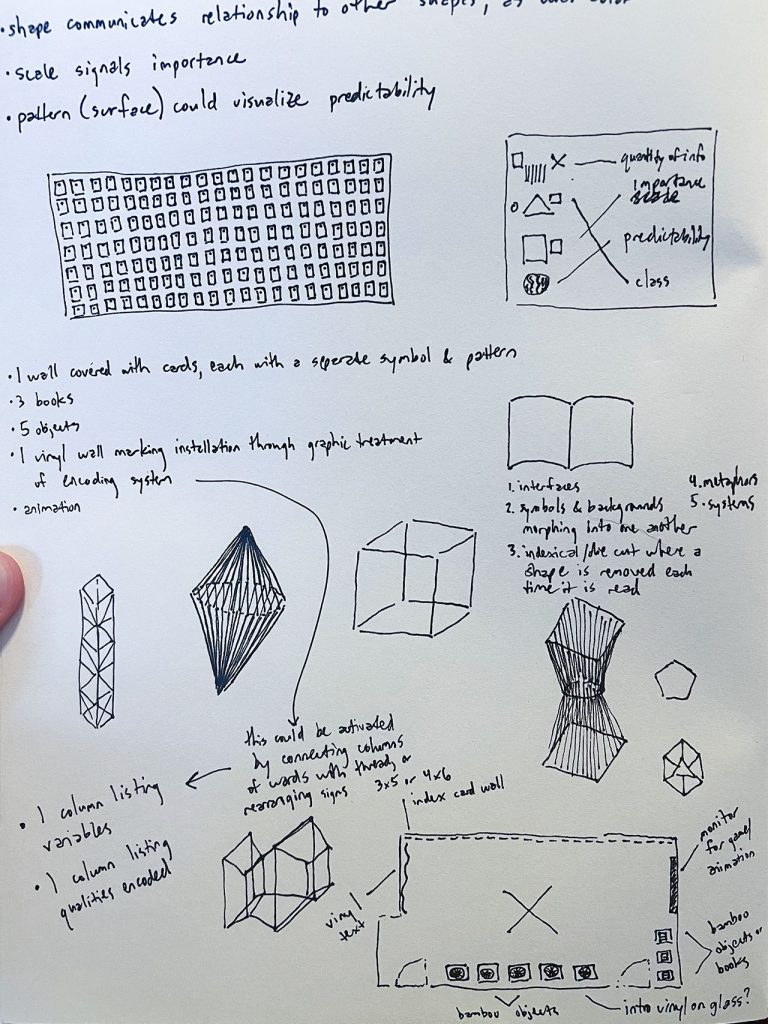
Practice as Research put scholarly analysis, studio making, and critical reflection into dialogue. Historical systems and interface conventions supplied the questions; sketches, models, drawings, prints, and gallery tests revealed how the system could take form.
KNOWN CONDITIONS → independent doctoral research • speculative rather than functional encoding • gallery presentation • mixed analog and digital production • limited installation period.
RESEARCH • TERMS, SYSTEMS + METAPHORS
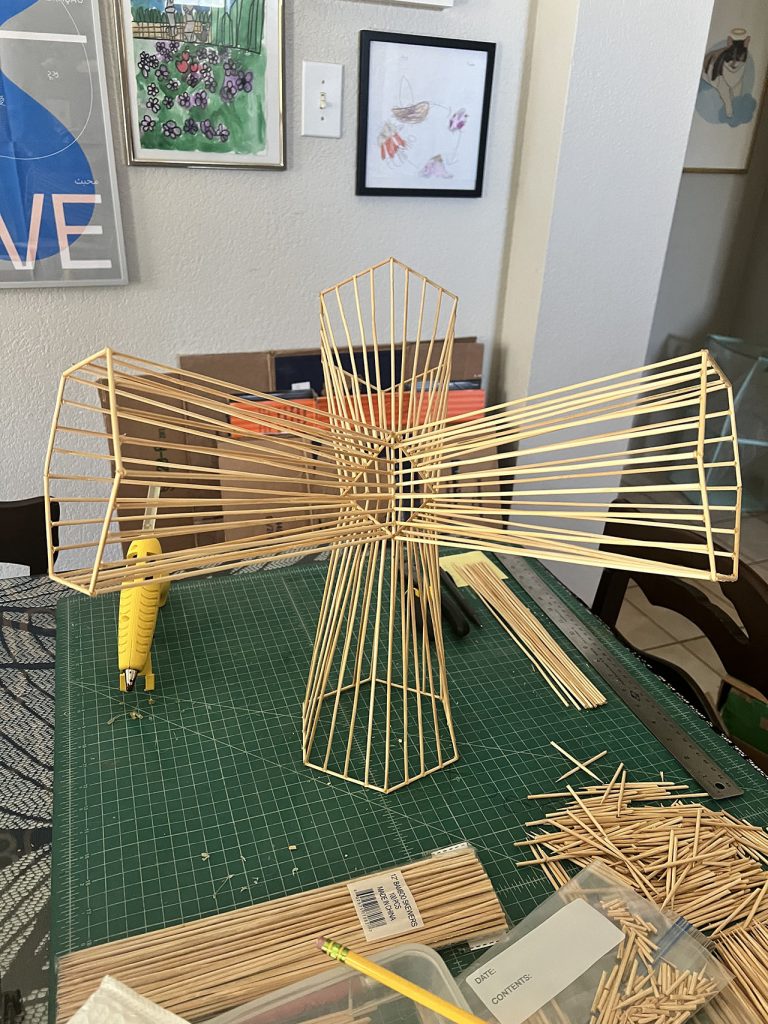
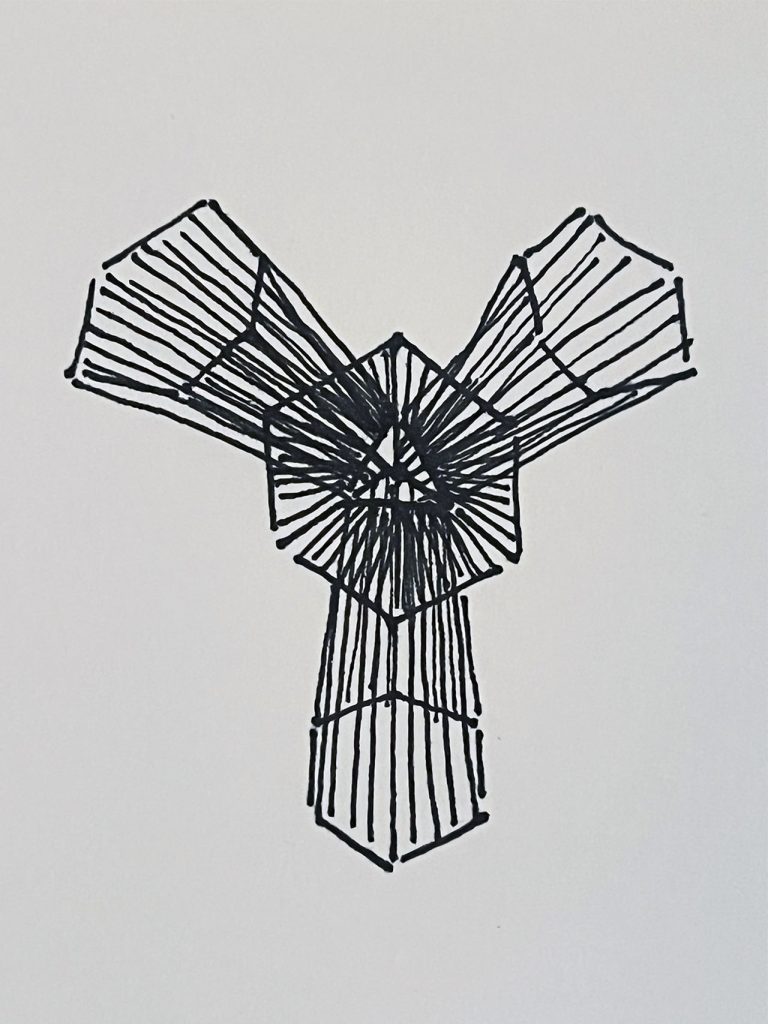
PROCESS • FORM MOVING BETWEEN 3D + 2D
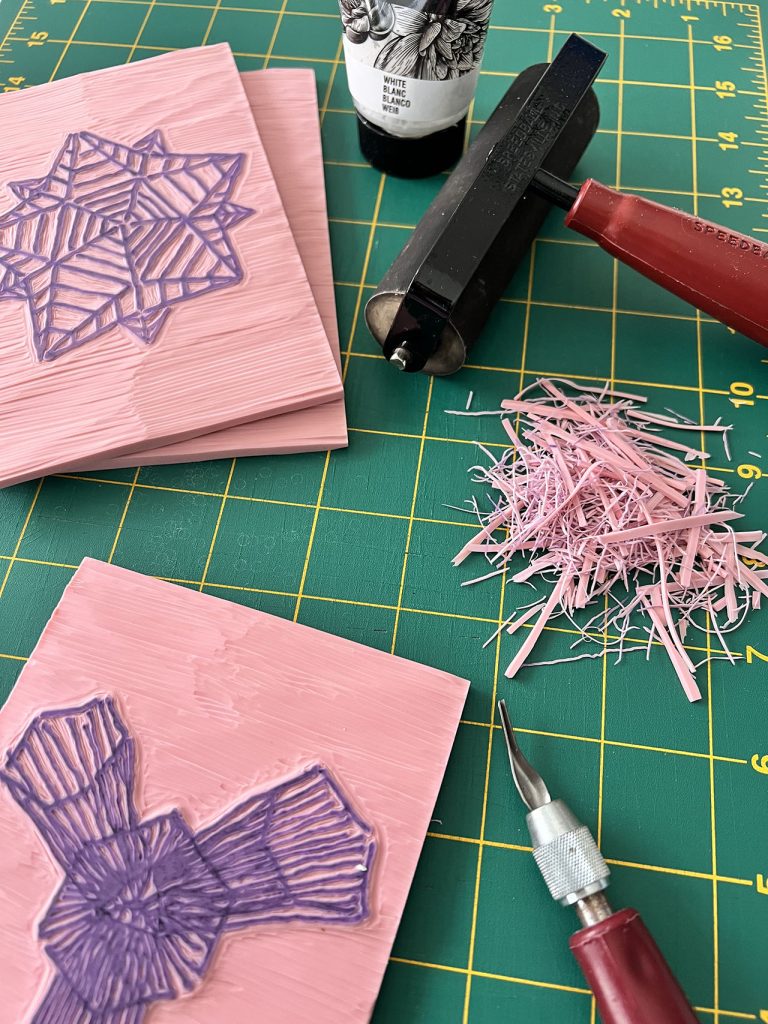
PROCESS • HAND-CARVED LINO + TEST PRINTS
DESIGN LOGIC
Create a system people can modify to explore meaning.
No specific dataset was encoded. Instead, five forms established a propositional language of line density, shape, symmetry, and segmentation. Synthetic flowers added a second, organic register. Making the language physical and interactive allowed its assumptions—and possibilities—to be handled rather than merely described.
SYSTEM LOGIC • GEOMETRIC STRUCTURE + ORGANIC VARIATION
Strategic decisions
Three decisions turned research into an encounter.
The exhibition was designed as an open proposition rather than a resolved interface. Each decision made the inquiry more visible while creating a way for visitors to enter it.
INSTALLATION AS RESEARCH ENVIRONMENT
01
Expand the interface into an exhibition.
A single digital prototype would have privileged one method and required the research to resolve too early. A spatial installation allowed physicalization, autography, interface design, and metaphor to remain in productive conversation.
WHY IT MATTERED → The exhibition became a shared structure for otherwise separate research threads.
ONE FORM TRANSLATED BETWEEN 3D + 2D
02
Translate one language across dimensions and materials.
Five forms evolved between sketch, bamboo construction, drawing, digital composition, linoleum carving, and print. Each translation exposed different constraints: gravity, perspective, repeatability, imperfection, and scale.
WHY IT MATTERED → Making did not simply illustrate the research; it generated new knowledge about the system.
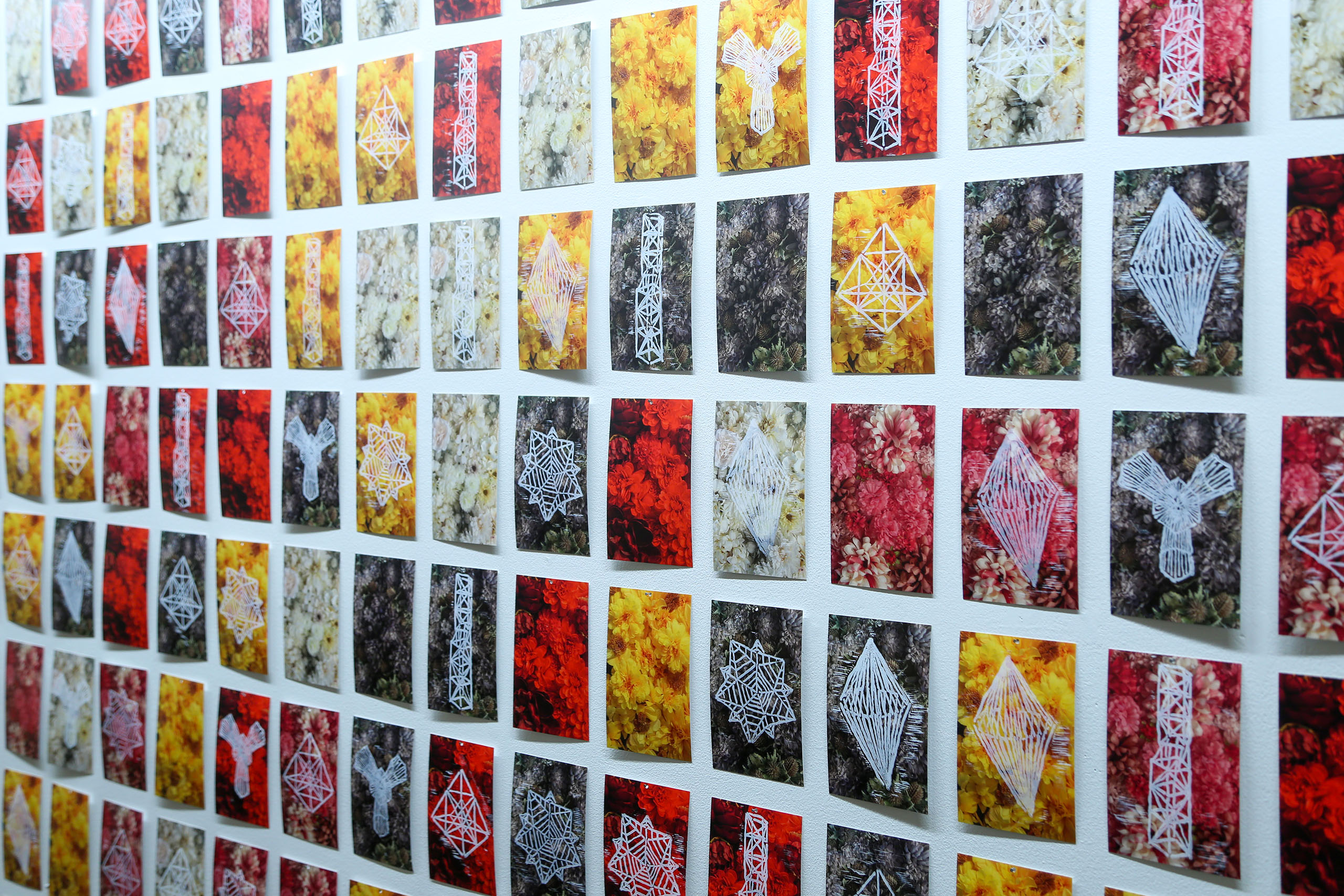
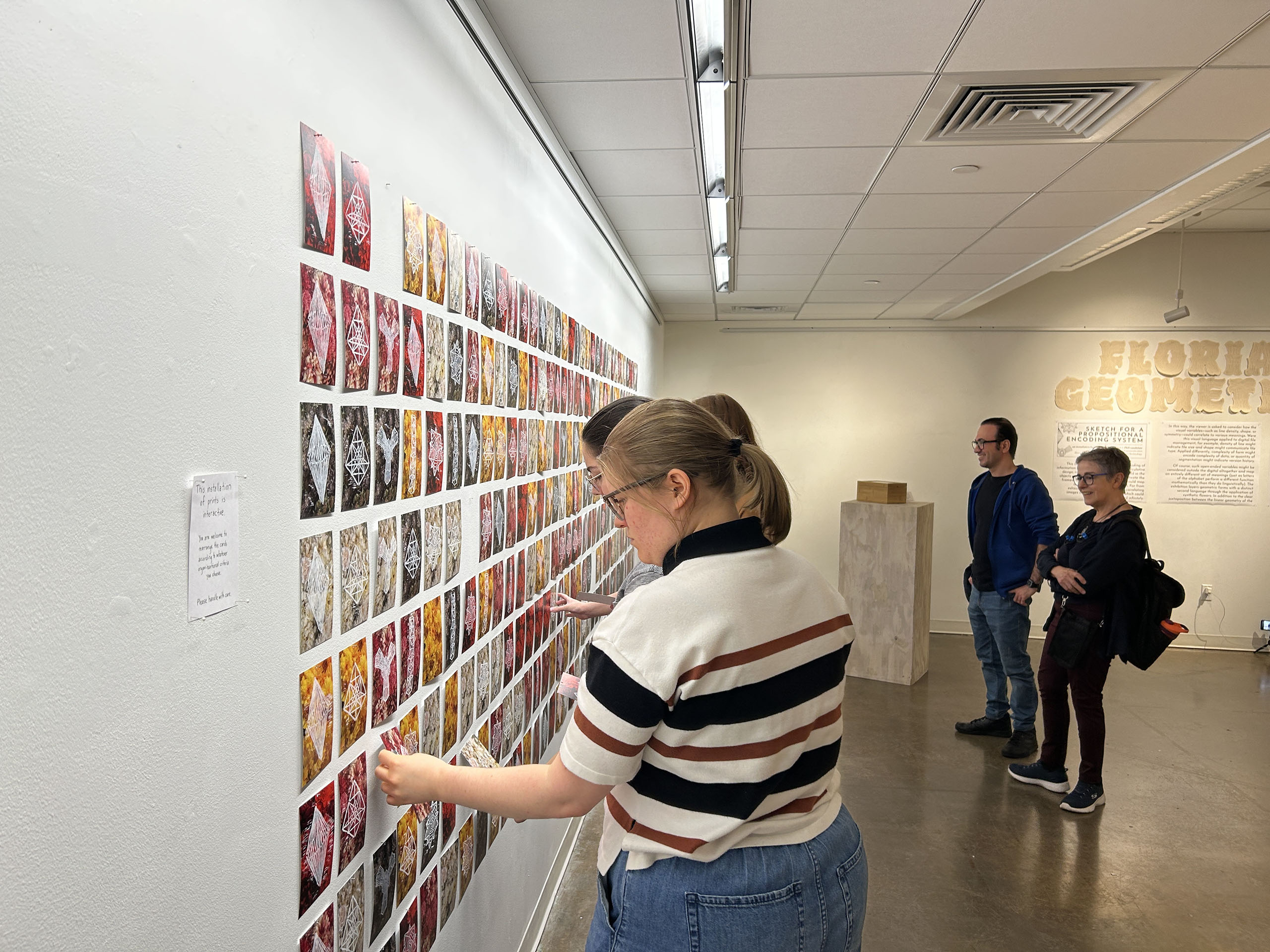
PARTICIPANTS REARRANGING THE PRINT WALL
03
Make participation part of the evidence.
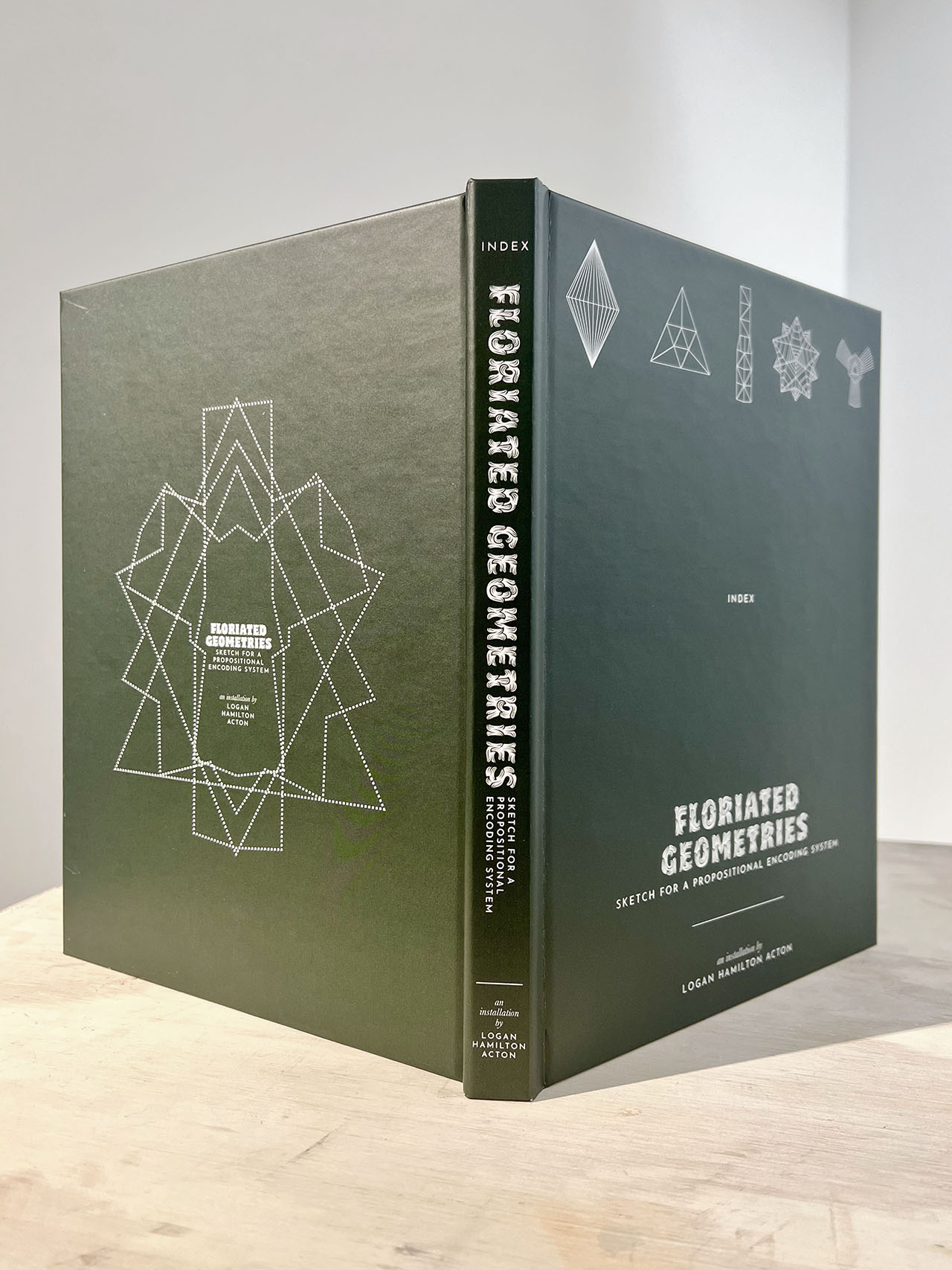
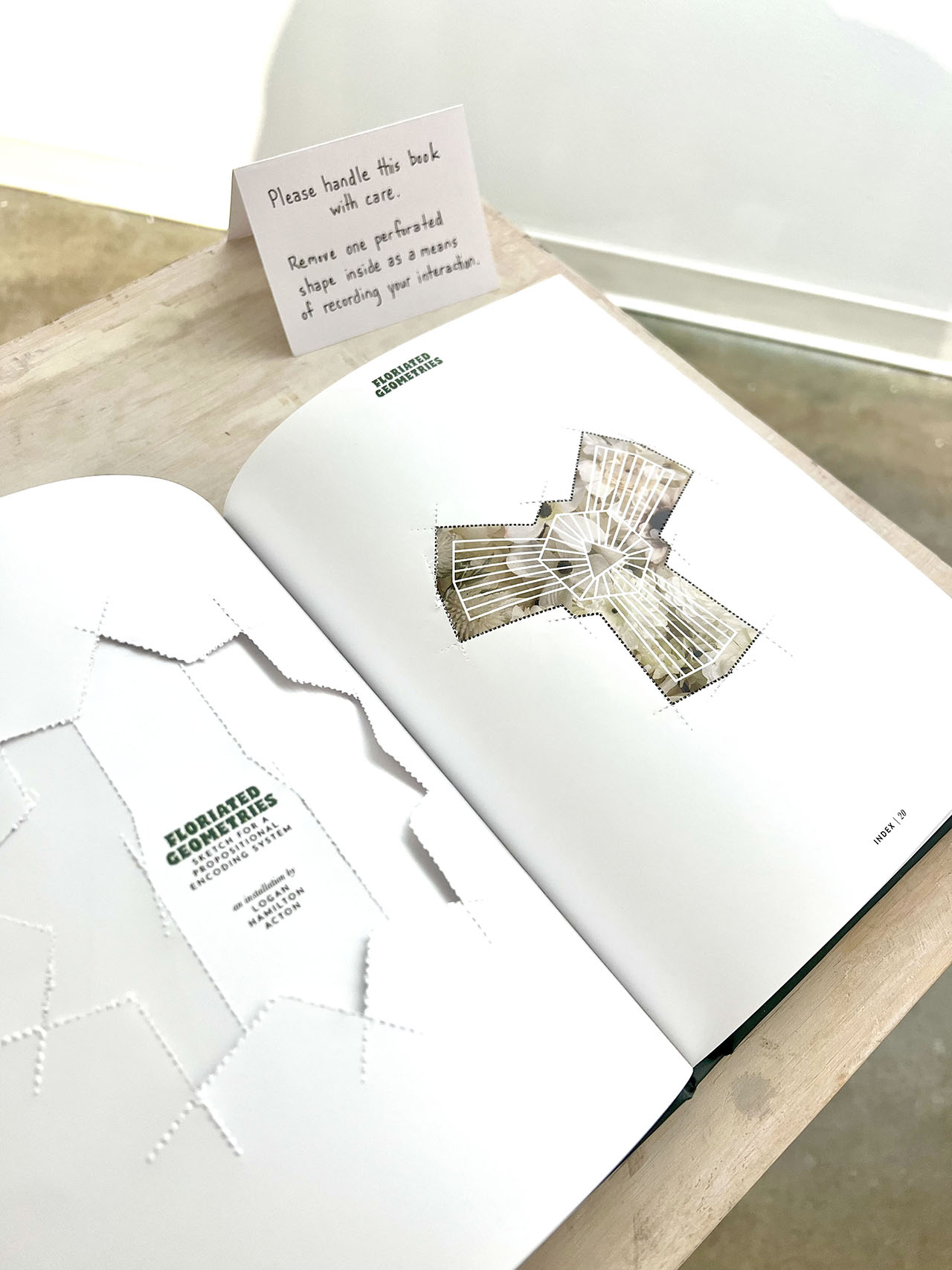
Visitors could rearrange 4×6-inch prints, remove perforated forms from a self-indexing book, handle research files, and respond through a short survey. Their actions changed the artifacts and revealed where the invitation was—or was not—clear.
WHY IT MATTERED → The system could be evaluated through behavior as well as interpretation.
THE SYSTEM IN PRACTICE
One proposition, tested through many forms.
The same language moved through sculpture, hand printing, book design, video, a modular wall, and exhibition paratext. Applications were related without becoming identical; each medium tested a different property of encoding and interaction.
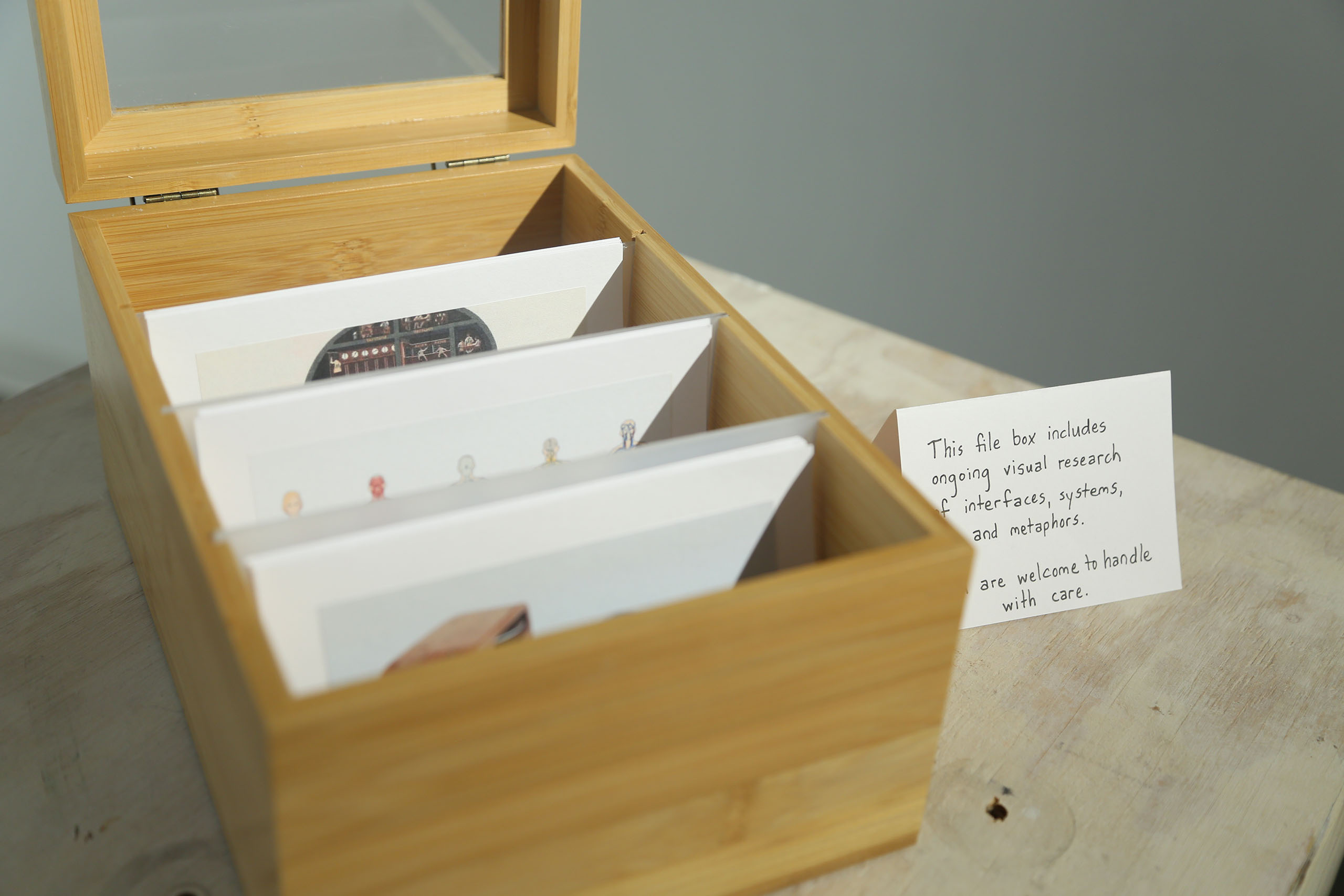
The research file made the inquiry visible but was the least coherent element in participant feedback—an important limit carried into the reflection.
DOCUMENTED OUTCOMES + LEARNING
What the experiment revealed.
The work produced a coherent installation across sculpture, print, book, video, wall, and exhibition text. Visitor activity supplied bounded evidence: 28 shapes were removed from the self-indexing book, while six anonymous survey responses identified interaction as the strongest aspect and the visual research files as the least resolved. The small sample does not support broad conclusions.
System
Five forms across many media
A shared language connected sculpture, print, book, video, wall, and exhibition paratext.
Interaction
28 shapes removed
The self-indexing book registered use through subtraction—not 28 verified individual visitors.
Learning
Six survey responses
Interaction was strongest; clarity and the research-file element needed further development.
REFLECTION + CREDITS
The experiment made its own limits visible.
One respondent called the book “stunning and a lovely form of quiet interaction”; another wrote, “I don’t understand what information is being encoded.” The contrast captured the experiment’s central result: interaction made the proposition more compelling, but not automatically clearer. The research files, absent scale variable, inconsistent perforation, and incomplete link to desktop alternatives showed where framing and affordances needed work. A system becomes useful when people can understand its rules, act within them, and reveal what its designer could not see alone.
PROJECT CREDITS
Research, concept, visual system, artwork, exhibition design + writing: Logan Acton • Select photography: Christine Veras • Presented at UT Dallas AHT Gallery • Doctoral research:Information Visualization in the Expanded Field
Labor of Luxury: an identity for the work behind the surface.
A COMPLEX IDEA NEEDS A FORM PEOPLE CAN ENTER?
Let’s make the structure visible—and testable.
If your organization is working with specialist knowledge, an unfamiliar system, or a new way of thinking, Argot Nots can help turn the underlying logic into a form people can encounter, navigate, and use.